


Opens in a new tab. Your article title and link are shared only with the AI assistant you choose.
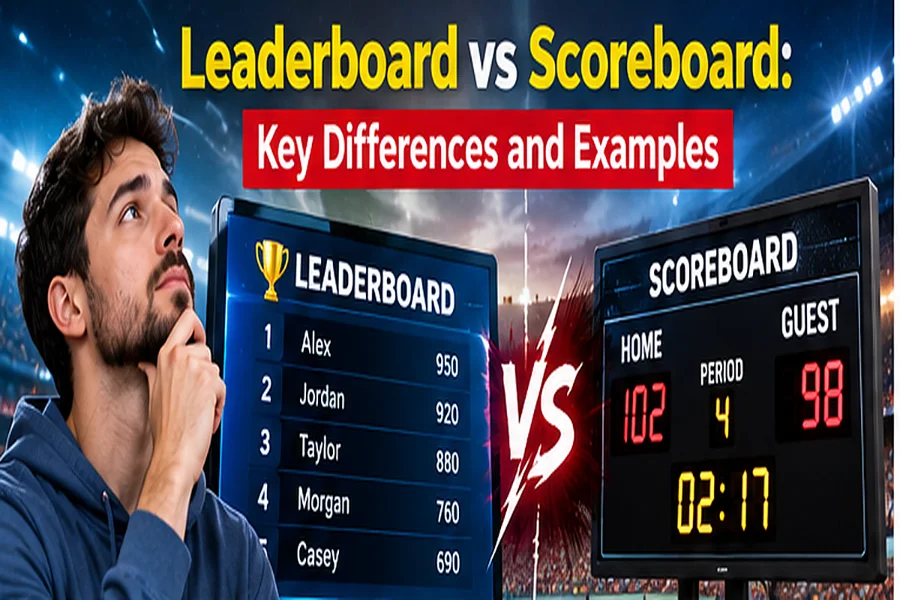
Leaderboard vs scoreboard may seem like a small distinction, but the wrong display leaves spectators staring at numbers that don’t answer their question. A scoreboard shows an event’s score, while a leaderboard ranks participants against one another. In 2026, the Entertainment Software Association counted 212.3 million regular U.S. video game players, or 67% of Americans ages 5–90.
That distinction reaches beyond gaming into school contests, youth sports, fundraising, and employee challenges. You may need one board for today’s basketball score and another for the strongest team across a season. Here you’ll see how the formats differ, where their rules overlap, and how to choose a fair, readable display.
What Is a Leaderboard and How Does It Work?

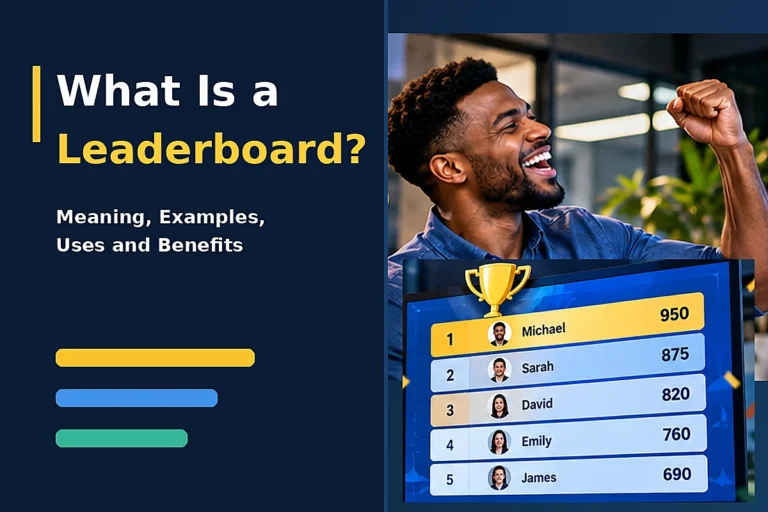
A leaderboard ranks people or teams using an agreed performance measure. If Michael earns 80 points and Ashley earns 95, Ashley appears above Michael. You can rank participants by sales, quiz points, race times, donations, or wins.
Every leaderboard needs participants, scores, a ranking rule, and a time period. A sales contest might rank employees by closed revenue and reset monthly. A reading challenge could rank students by the number of qualifying books completed.
When you want an online ranking display, a leaderboard maker that makes every score count offers a relevant tool to consider. It lets you approach the task as a ranking display instead of asking viewers to sort an ordinary score list themselves. Check the available scoring, editing, and sharing options before choosing a platform.
How Does a Leaderboard Calculate Rank?
Leaderboards usually sort high scores first, but lower values win in races or timed tasks. With scores of 92, 86, and 74, the highest scorer takes first place in a points contest. If two people score 86, published rules determine whether they tie or need a secondary comparison.
Gaming is familiar territory: ESA counted 190.6 million American players in 2024 and 205.1 million in 2025. These participation figures do not prove that leaderboards improve performance. Useful rankings connect every position to a visible, consistent result.
Expert Quote: ESA president Stanley Pierre-Louis called video games “a powerful cultural force due to their widespread appeal across every demographic.” He was speaking about gaming broadly. That range makes clear ranking displays important.
What Is a Scoreboard and When Is It Useful?
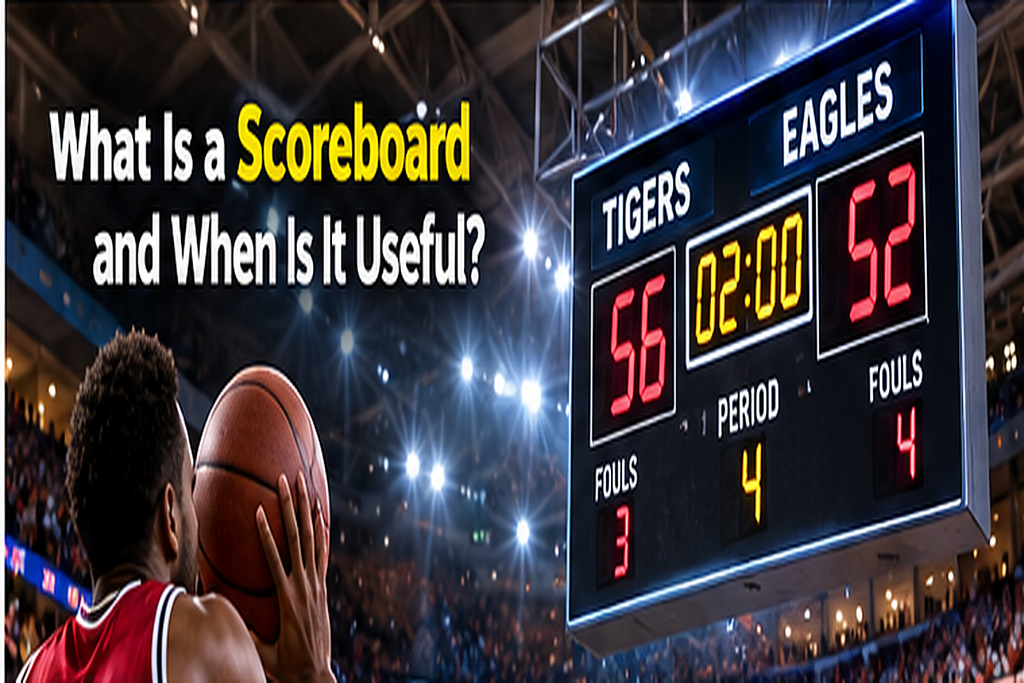
A scoreboard shows the score or running total for a game or event. Picture Tigers 56 and Eagles 52 with two minutes left in a basketball game. Spectators understand the match without knowing either team’s season ranking.
Scoreboards can include a clock, period, fouls, timeouts, innings, or other relevant details. Some show only two numbers, while others track several game statistics. Either way, you can read the current result without calculating tournament rankings.
Large tournaments make the distinction clear. The 2026 FIFA World Cup featured 48 teams and 104 matches across 16 host cities. Each match had a score, but group standings required results from multiple matches.
What Can a Scoreboard Track Besides Goals?
A scoreboard need not resemble a stadium screen. A school quiz can show team totals after every round, while an event can display points from several activities. These running scores need not produce formal ranks.
Judges may record individual rounds before calculating final rankings. A scoresheet preserves those detailed marks, while a scoreboard displays the running total. That distinction is valuable when participants need to verify how points were awarded.
Must-know Tip: Choose a scoreboard when viewers ask, “What’s the score right now?” Make the main numbers readable from a distance or on a phone. Include extra details only when they explain the action.
Leaderboard vs Scoreboard: Key Differences
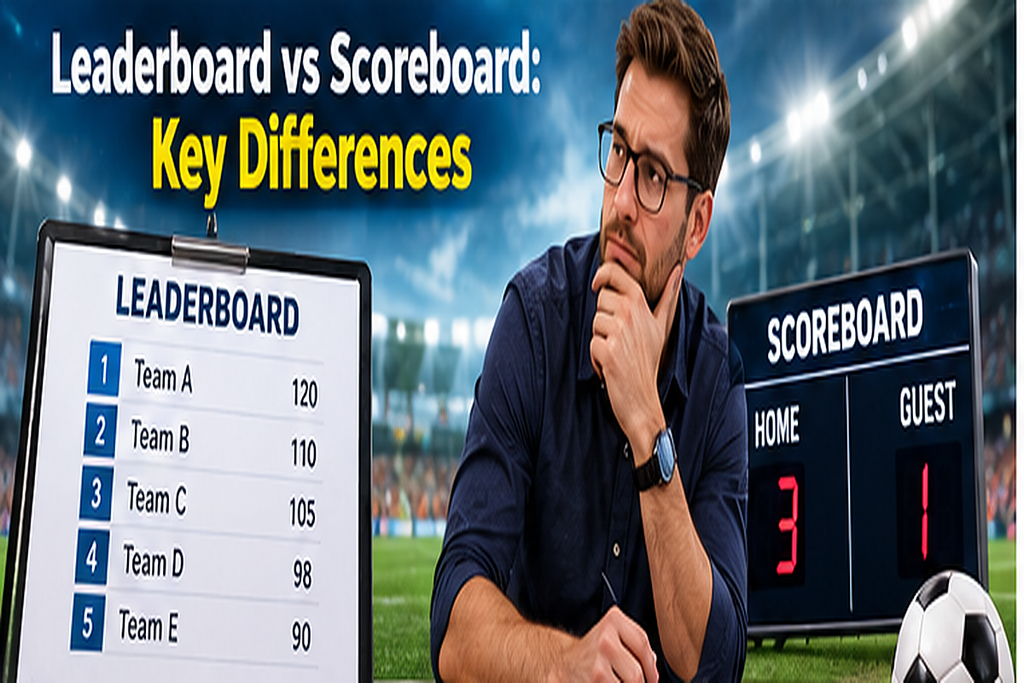
The key question is whether you need a result or a relative position. A scoreboard answers “What’s the score?” while a leaderboard answers “Who’s first?” Both can update live and appear on websites or televisions.
- Purpose: Scoreboards show results; leaderboards show rank.
- Time frame: Matches versus days, seasons, or longer periods.
- Display: Game details versus ordered standings.
- Sorting: Fixed participant order versus ranking-based order.
- Audience: Event spectators versus people comparing performance.
Sharing numbers does not make these formats interchangeable. A soccer score of 2–1 cannot reveal tournament standings without other results. The 2026 World Cup used 12 groups and a round of 32, requiring both match scores and broader tables.
A scorecard records performance against set criteria. At work, it can show targets without ranking employees. Name your board according to what it communicates.
How Should Ties and Scoring Rules Work?
When participants have equal points, they may share a rank or face a tie-breaker. Secondary rules include faster completion, goal difference, and head-to-head results. Publish the chosen rule before the contest begins.
For fair business rankings, compare equivalent opportunities and consider quality alongside volume. Thirty calls should not automatically beat five qualified deals unless calls are the stated metric. Must-know Tip: Explain what earns points and how ties are resolved.
Real-World Examples: Sports, Games, and Business

In sports, scoreboards follow individual matches while standings compare results across matches. Golf leaderboards rank players relative to par, while basketball scoreboards track points in one game. Esports tournaments may display scores, rankings, and brackets separately.
Businesses use the same distinction with different metrics. A support scoreboard might show tickets resolved this shift, while a leaderboard ranks agents by defined performance criteria. Gallup reported global employee engagement of 21% in 2024 and 20% in 2025, versus 31% in the U.S. for 2025, but these figures do not establish effects from rankings.
Illustrative case study: A community basketball league. Coach Peterson organizes six teams and displays each game’s score courtside. Afterward, he updates standings using wins, losses, and a published tie-breaker, so families can follow both the game and the season.
How Can Rankings Motivate Without Discouraging People?
A leaderboard dominated by familiar winners can discourage newcomers. In 2024, Gallup and Workhuman found 61% engagement among employees getting weekly feedback and recognition, versus 38% among those getting weekly feedback but less frequent recognition. This association supports recognition, not a claim that leaderboards cause engagement.
Expert Quote: Gallup scientist Jim Harter said, “Recognition is a short-term need that has to be satisfied on an ongoing basis.” Celebrate improvement rather than shaming people near the bottom. You can show progress toward individual goals alongside overall rank.
How to Choose, Create, and Display the Right Board
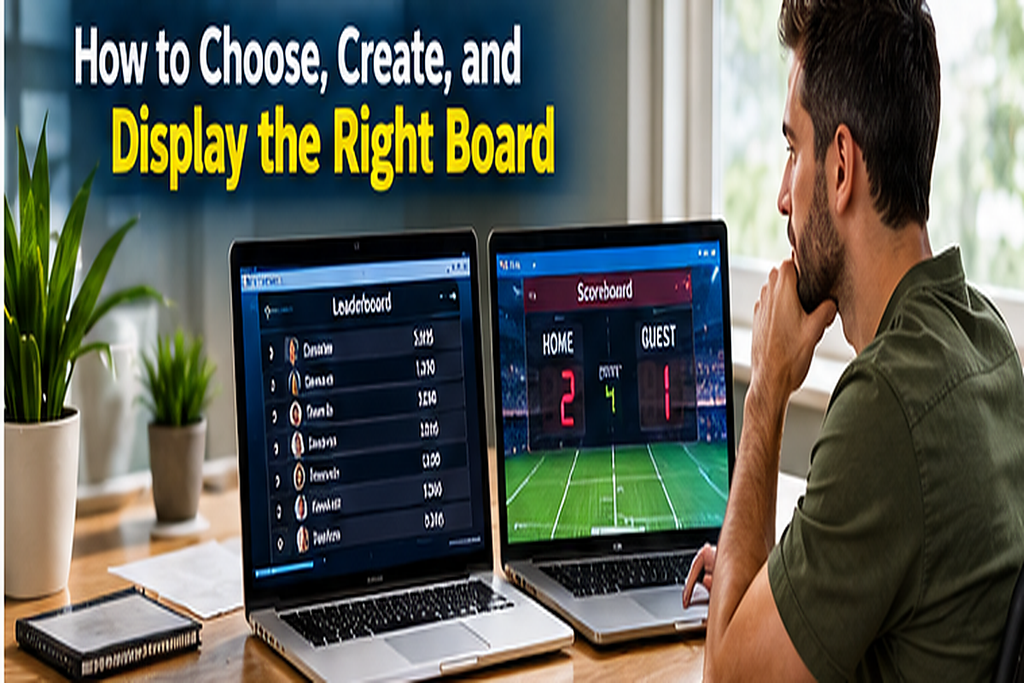
Start with the question viewers need answered. Use a scoreboard for current points and a leaderboard for comparative rank. Both are valuable when separate games contribute to an overall championship, especially when competition rules determine how results combine.
- Choose a scoreboard for head-to-head matches, quiz rounds, and live scoring.
- Choose a leaderboard for sales contests, fundraising rankings, fitness challenges, and season standings.
- Choose a scoresheet when judges must record detailed marks for several rounds.
- Choose a bracket when audiences need to see who advances in knockout matches.
- Choose a dashboard when several business metrics matter more than competitive rank.
What Should You Check Before Publishing?
Record the metric, participants, dates, update permissions, and tie-breakers. Test how you correct errors without losing history. For employees or children, consider private or anonymized displays.
A spreadsheet works for small events, while larger audiences may need a shared live display. Test the board on phones, projectors, and websites, including its refresh behavior.
Must-know Tip: Trustworthy updates and readability matter more than animations.
Clear labels, strong contrast, and readable numbers help different audiences follow results. Never depend on color alone to identify leaders or winners. If a display is hard to understand at a glance, simplify it.
Do not assume that a real-time update is necessary for every challenge. A weekly classroom ranking might need only one reliable update each Friday. A live game, however, needs changes that match what spectators are seeing.
Conclusion:
Leaderboard vs scoreboard comes down to one distinction: scores show results, while rankings compare them. Choose a scoreboard for a match, quiz, or live event, and a leaderboard for shared performance standings. When you need both, feed the match results into a separately labeled ranking display.
Neither board is automatically more accurate or motivating. Clear rules, timely updates, and fair comparisons determine whether viewers trust what they see, especially when results affect recognition, prizes, or official standings. At work, recognize improvement rather than assuming public competition motivates everyone.
Test your display with someone unfamiliar with the event. If they can read the score, understand the ranking order, and explain ties without needing instructions from you, your design is doing its job. The questions below address situations where the distinction remains confusing.
Frequently Asked Questions
1. Is a Leaderboard the Same as a Scoreboard?
No, a leaderboard ranks participants while a scoreboard shows scores. Both may update live. Their purpose distinguishes them.
2. Can a Scoreboard Show More Than Two Teams?
Yes, it can show multiple teams. Their totals need not be ranked. Sorted totals create a leaderboard.
3. Can You Use a Leaderboard and Scoreboard Together?
Yes, tournaments often need both. Show game results on a scoreboard. Feed those results into season standings.
4. What Is the Best Board for a School Competition?
Use scoreboards for live quizzes. Use leaderboards for weekly rankings. Explain the rules clearly.
5. What Is a Real-Time Leaderboard?
It changes ranks when scores change. Software can reorder entries. Refresh speed varies.
6. How Do You Break a Tie on a Leaderboard?
Use published rules. Share ranks or apply secondary metrics. Decide beforehand.
7. Which Is Better for a Sales Team?
Use leaderboards for representative rankings. Use scoreboards for current sales totals. Protect sensitive employee information.
8. Can I Make a Leaderboard in Excel?
Yes, Excel can store scores and names. RANK.EQ calculates numerical ranks. You must still handle ties.
9. Does a Leaderboard Always Rank Highest Scores First?
No, lower times can win races. Higher scores usually win points contests. Define the order clearly.
10. What Is the Difference Between a Leaderboard and a Bracket?
Leaderboards rank results. Brackets show knockout matchups. Tournaments can use both.
11. Should a Leaderboard Reset Every Week?
It depends on your contest. Weekly resets offer fresh starts, while lifetime rankings preserve history. Label the period.
12. Are Free Leaderboard and Scoreboard Tools Enough?
Free tools suit small events. Larger ones need controls. Compare features first.


Comments
0 responsesNo comments yet. Be the first to share your thoughts.